

ACTS Translational Science 2026 - Conference Recap
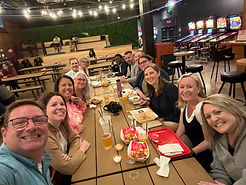
Many members of our CCTST community recently attended the Translational Science 2026 meeting in Milwaukee, which brings together teams from Clinical and Translational Science Award hubs across the United States. This year’s meeting focused on building trustworthy translational science through rigor, reproducibility, and real-world impact.
CCTST faculty and staff were prominently featured throughout the conference, contributing posters as well as highly regarded presentations and panel discussions.
Poster Presentations
Three CCTST staff members and one K Scholar - Stacey Gomes, PhD, Jennifer Veevers, PhD, Taylor Groeschen, and Tim Caldwell, MD, PhD - presented posters covering a wide range of innovative topics.
K Scholar, Dr. Caldwell, was recognized as a Top 50 poster presenter and was invited to deliver an oral presentation. His presentation was titled, “Injured proximal tubule cells are increased in kidney transplant rejection and are spatially located in distinct niches containing mixed immune cells”.
Community Representation

We were also excited to bring two of our community partners to the meeting this year. Jackie Humphries, president of our West End Community Advisory Board, attended and contributed her experiences working with researchers to improve community research efforts across the Academic Health Center and in neighborhoods like the West End.
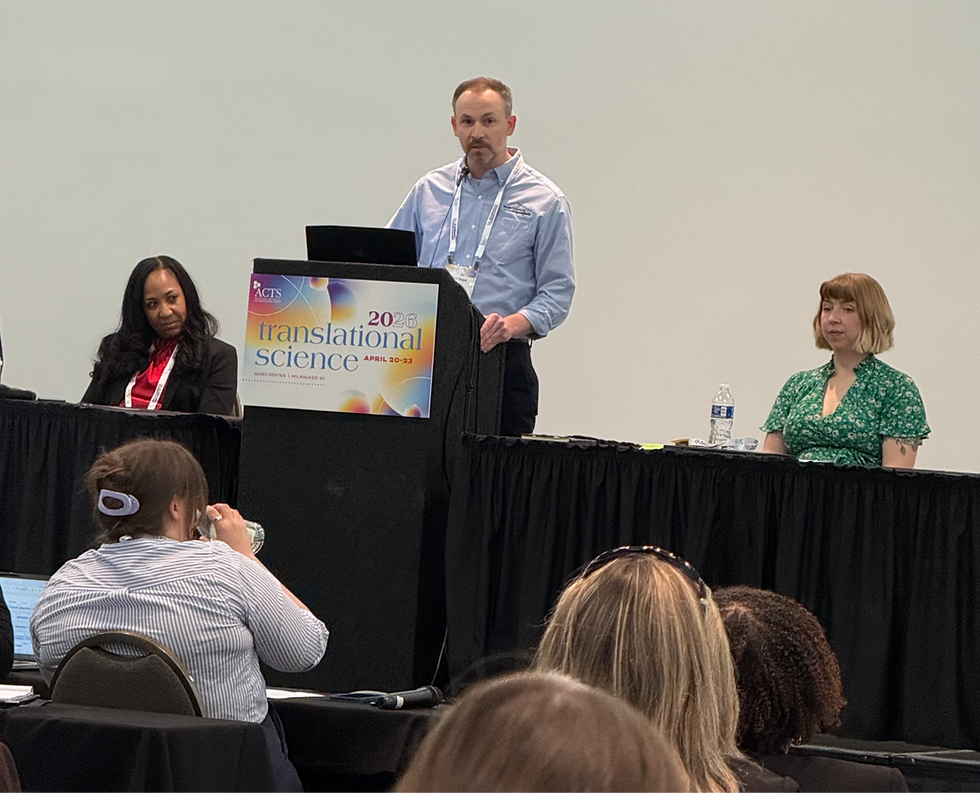
Aaron Grant, a Community Leaders Institute graduate and long-time CCTST community partner, also attended and presented a community partner case study during the session “Embedding the Translational Science Benefits Model (TSBM) into CTSAs: Frameworks for Evaluation and Impact.” His presentation highlighted his work with People Working Cooperatively (PWC) and the Cincinnati Children’s Environmental Health and Lead Clinic.
Through this partnership, the Lead Clinic identifies cases in which PWC provides critical, no-cost home repairs to reduce asthma triggers and toxic environmental exposures in homes with young children. Aaron shared insights from applying the TSBM to his work, emphasizing its value in reflecting and communicating project impacts.
Session Presentations and Panel Discussions

Lori Crosby, PsyD, Brittany Rosen, PhD, and Stacey Gomes, PhD were also authors for the session “Embedding the Translational Science Benefits Model (TSBM) into CTSAs: Frameworks for Evaluation and Impact.”
Dr. Crosby described how TSBM evaluates outcomes and societal impact in community-engaged research, highlighting metrics from prior CCTST community grant programs. Dr. Rosen explained how the TSBM logic model supports hub-wide quality improvement and evaluation by guiding data collection, analysis, and reporting. The session drew a full audience and garnered enthusiastic feedback from conference leaders and participants.

Angela Mendell, MS, spoke in the session “The State of Things – Clinical Research Professional (CRP) Workforce Update,” sharing updates on CCTST efforts to improve CRP recruitment, retention, and education.
Monica Mitchell, PhD and Nanette Bentley from Cincinnati Children’s Marketing and Communications, gave a compelling presentation on “Effectively Communicating and Disseminating Translational Science to Community Audiences”, in which they discussed how effective, strategic communication helps translate research into real-world health impact.

Dr. Mitchell and Nanette shared practical communication strategies - from identifying audiences to measuring impact - using real-world examples. The session also emphasizes tools like plain language, visuals, and multimedia formats to enhance reach and relevance. Attendees gained actionable insights to strengthen communication efforts and maximize the impact of their research. The session was moderated by Lori Crosby, PsyD.

Lastly, Nick Ollberding, PhD, presented in the session “Building Rigor Through Target Trial Emulation: Concepts and Applications for Improving Translational Research” and Jareen Meinzen-Derr, PhD participated in a panel discussion titled “Deconvoluting the Data Sciences: Clarifying a Critical Discipline for Translational Research”.

At the conference, Dr. Meinzen-Derr officially began her term on the ACTS Board of Directors as a Director at Large - an exciting milestone that reflects her leadership and impact in the field. The Board represents a broad range of expertise across the field and provides strategic guidance and governance for the organization.
We are proud to have Dr. Meinzen-Derr as a co-director and celebrate her continued leadership, dedication, and vision for the CCTST and broader translational science community!


